Saturday, 29 November 2014

How to make malt

I've been doing some more malting at work recently. This is the process in which starchy barley grains are partially germinated so that when used for brewing the starch can be broken down to fermentable sugars. It's very, very, very, very, very, very, very, very, very, very interesting (sorry about that, you'll need to have been on twitter to get it).


The first stage is screening. I like this bit:


This separates the wheat from the chaff, or barley in this case. Though the grains have been mostly separated out there are still some bits of straw you want to get rid of, and a series of sieves and a blower do the job.

A barley grain

After that the barley's ready for steeping.The grains will have been dried for storage and they need to be rehydrated before they will start to germinate. At work we have cylindrical steeping and germination vessels. 


Here's a look inside:


The vessels tilt up for loading, and down for unloading:

Adding the grains

When loaded the barley sits on the sieve plate at the base of the vessel. The barley will then be completely immersed in water, following a carefully controlled programme of steeping alternating with air rests. Having air rests during the steeping of barley came directly from research carried out here. Well maybe not exactly here, but this workplace. It's now universally used as it makes malting much faster and more efficient.

Steeping alternated with air rests means yeast and bacteria on the grain are washed away, as well as phenols from the husk, oxygen can get to the grain so it can respire, CO2 is removed, and so is ethanol produced by the grain during anaerobic respiration. Yes, that last one disturbed me too. What a waste. Air will be blown through the grain bed and fans remove the CO2.

Getting the correct steeping schedule can have a huge effect on how well the grains germinate. Here's a picture of the same barley sample that's had different steeping schedules:


Example schedules may be water 8 hours/air 16 hours/water 24 hours or water 6 hours/air 10 hours/water 6 hours/air 6 hours/ water 6 hours. Tests for germinative capacitiy (and similar tests for germinative energy and water sensitivity) can help determine the best steeping schedule to use.

Here's a grain that has just chitted i.e. the rootlet is just showing


After approximately two days the steeping will be completed and grain moisture 42-46%. The germination stage starts now, and the plant hormone gibberellic acid can be sprayed on at this point. This is where our cylindrical vessels come into play as they will periodically rotate quite rapidly to break up the grains rootlets and stop them forming a big tangled mat.

Here's the rotating:


And here's some tangled grains all stuck together:


Most big malting plants have vessels with rakes or screws running through them to break up grain tangles. And it can also be done by a bloke with a rake, as most pictures of floor maltings show, though I have heard they have something like a lawn mower they can move through the grain bed too which must be a lot less effort.

The germination stage starts next. During steeping the embryo will produce gibberellic acid, and as I've said it can also be sprayed on to help things along their way. The gibberellic acid is transported through the aleurone*, a thin layer of cell surrounding the grain, which produces or activates enzymes which will being the modification of the grain. These include amylases, proteases and β-glucanases. These enzymes are necessary for converting the starch in the grain to fermentable sugars. Though we don't want any more than is necessary at this stage as over modification means the grain will use for growth sugars the yeast could ferment.

Here's a grain after rootlets have grown

The modification breaks down the structure of the cells surrounding the starch granules in the grain and provides the enzymes that will be used during brewing. β-glucans (and pentosans) are polymers that can cause serious problems during the brewing process if their levels are too high. They increase wort viscosity making making it difficult to separate the liquid from the grains at the end of mashing, and can lead to hazes forming in beer. Protein needs to be broken down to make the starch granules it surrounds accessible to the amylases, and to provide raw materials the yeast will use during its own growth.

Germination is allowed to continue for around four days. Rootlet growth is vigorous but a bit erratic. The growth of the acrospire, which would become the shoot, is of more interest to maltsters. Unlike the rootlets which go the easy (proximal) way out of the grain it goes the long way round from the embryo and works its way inside the husk aiming for the far (distal). When it's about 75-80% of the way there germination as gone as far as we want it to.

Here are some grains at the end of germination:


This is moist green malt, and it tastes a bit like bean sprouts at this stage. Which perhaps explains why bizarre as it now sounds beans were once used for brewing. It is possible to brew using green malt, and I've heard of a grain whisky distillery that does this. It has a very short shelf life though, as it will keep growing wasting all that valuable sugar that could be turned to alcohol, and will rapidly go mouldy.

Usually this is prevented by the next stage, kilning. This is when the grains are heated to halt germination at the optimum stage of enzyme production and grain modification, and dry the grains to the moisture content at which they can safely be stored without going mouldy. The degree of kilning will also to a large extent determine which type of malt is made and will have a big effect on the flavour of the beer.

Malt kiln


At first the grains will 'free dried' by heating gently with an air temperature of 50-60°C (though the grains themselves will be at a much lower temperature than this) and the air will be vented away. This will continue for around 12 hours, when the moisture content will be about 24%. The free drying stage will have removed the surface moisture, and that in the outer layers of the grain. We now move on to forced drying, where moisture will diffuse from deeper in the grain to the surface for removal and the grain will start to shrink. This would slow the rate of water removal so the temperature will be increased slightly to 70-75°C and the fan speed reduced. The grains will not get as much evaporative cooling as they did during free drying, and their temperature will start to rise. After perhaps 10 hours the moisture will be down to 10-12%.

Malt in the kiln

Now the curing stage begins, as the most difficult to remove water, that which is bound to large molecules inside the grain, such as the starch, is removed. To achieve this the temperature is increased again, and the air is substantially recirculated. Curing will generally continue for three hours or so until the moisture content is below 5%.

Temperature and humidity probes

As well as reducing the moisture content of the malt kilning also drives off unwanted volatiles, particularly sulphur compounds, and adds colour and flavour due to Mailard reactions between sugars and amino acids. The higher the final kiln temperature the more of this will occur. A lager malt might have a final kilning temperature of 80°C, whereas for a pale ale malt it might be 100°C.

This is a major reason why you get the reek of brimstone during lager fermentations (a sure sign it's the devil's work), and the unpleasant vegetable taste of dimethyl sulphide and watery yellow colour of many lagers. To which we can contrast the pleasant malty flavours and rich golden colour that will be found in an ale made with a pale malt grist.

After kilning the malt will be cooled rapidly but we're not finished yet. Oh no. The rootlets need to be removed, or as we say in the trade the malt needs to be deculmed. We have a machine for that too:


Here's the rootlets or culms:
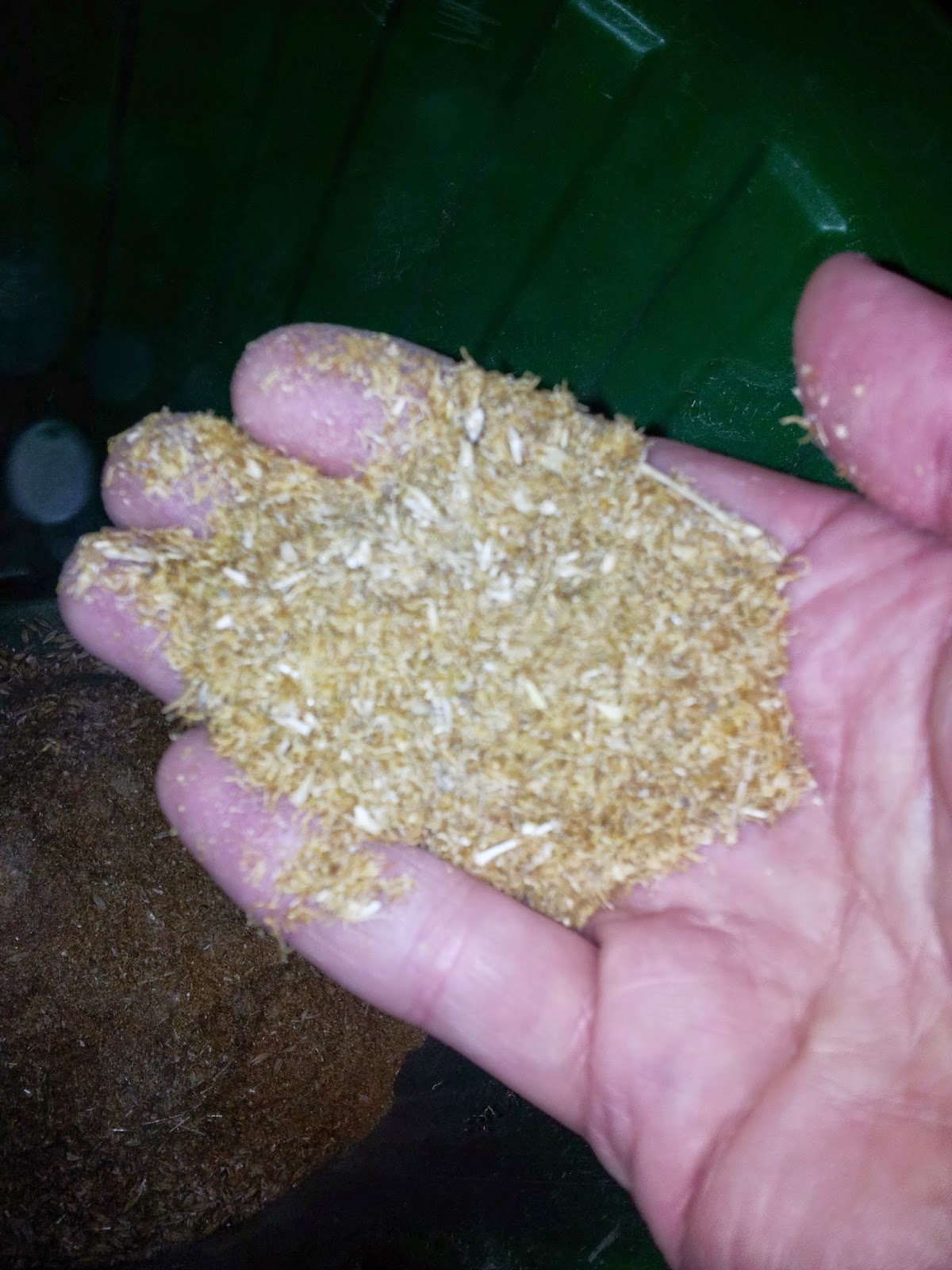


They're high in protein and not good for beer so are best used as animal feed.

When the malt has been deculmed it's still not over, as freshly kilned or 'fiery malt' is not good for brewing and need to be stored for around a month before use.

Then it's over, the production of 'white malts', the ture enzymic malts (lager, pale, vienna, mild, munich) that can be used as 100% of the grist has come to an end and I can bring this #beerylongread to an end. Crystal or caramel malts, along with the various types of roasted malts are another, though closely related, story so you'll have to wait for the #beerylongreadappendix for that.


*I follow the true path of Palmer, not the false trail of Briggs.

Thursday, 27 November 2014

Meeting up with old friends

I got to the Old Ale Festival at the White Horse on Saturday and met up with a couple of old friends: one was a mate from Heriot-Watt and the other was the Imperial Russian Stout from the Old Dairy Brewery.

It's very rare that the stout gets let out on cask and even rarer that I've got to drink it. I have to say it was superb, so the team at the brewery have done a great job. The new branding was looking good too:

This is the Old Ale, the IRS hasn't been re-branded yet
Even beer this strong couldn't keep the chill out though. We were sitting in the back room that didn't have much in the way of heating. Which was good news for the beers stillaged there but not good for us as the cold crept into our bones. So we went into the main bar and squeezed on to a table next to a bloke in a Hawkwind T-shirt. This of course lead to fascinating conversation about such diverse subjects as Bob Calvert, Space Ritual, and the state of Daevid Allen's health. The strength of the beer was starting to tell though, so after what may have been as little as three pints (I don't know, I wasn't keeping track but my mate was) it was time to stagger off whilst I still could.

At time's I've had my doubts if it's worth the trek to  White Horse for the Old Ale Festival, but after this I'll definitely be aiming to get to next year's.

Tuesday, 25 November 2014

Fermentability and mash temperature

When I wanted to make some low alcohol beers by producing a low fermentability wort a colleague dug out a paper for me relating mash temperature to fermentability. Though there are other factors at work as well I found it a great help.

Here's the figures:


Temperature °C and apparent attenuation %
65°C 82%
70°C 70%
75°C 50%
80°C 30%

For those that don't know what I'm talking about when you mix malted barley with hot water (the mash) enzymes from the malt break starch down to fermentable sugars. The higher the temperature the quicker the enzymes themselves break down and the less fermentable sugar is produced. 

Saturday, 22 November 2014

Immanentizing the Eschaton


It was the beer that finally immanentized the Eschaton. Thanks to some fellow workers from Woking beer festival I’d finally got my mits on a can of Heady Topper, a beer made by John fucking Kimmich himself.
After a week spent on a mountain top retreat, drinking nothing but water and mediating on the structure of iso-humulones I felt ready to drink this elixir. I'd saved the can for my birthday and invited people round to take part in this joyous occasion. Wanting to get the beer to the right temperature I went to get it out of the fridge and got the shock of my life. It was gone. 


You can imagine the panic I felt. It was like losing a winning lottery ticket, only worse. Had I been burgled by a jealous beer geek? Had one of my friends nabbed it and necked it without me noticing? In fact it was nothing of the sort, my lupulophobic brother had simply moved it to make space for a bottle of an inferior fruit based beverage.
Panic over I let the can warm a little until it was cold but not ice cold whilst getting in a quick final meditate to try and calm my nerves about whether I was worthy not. Then at last the moment arrived. As the great man himself instructs I drank directly from the can and that moment I learnt that everything they said about the beer was true. I would even say I felt angels dancing on my tongue, except my fellow beer nerds would only start arguing about how many angels can fit on a tongue. 


I turned to the friend I was with to describe the wonder I had just drunk and was shocked to see him some way below me. I had actually started levitating! His startled face was squinting at me and I realised I had also started glowing with divine light. I lowered him the can for a sip and soon he was floating beside me, a look of ecstasy upon his now luminous face. 
We wafted from the kitchen to the living room where the can was passed round. "This tastes like grapefruit" said my brother*. "It's beer" said my sister in law. But whatever their tastes the power of the beer was unstoppable and before long we were all bobbing around the ceiling. "Turn the lights off" I said. Seeing as we were now all glowing with divine light I didn't see any reason to waste electricity. How I wondered could this state of bliss be improved? It was after that I made a mistake I know I will regret for the rest of my days."I could do with another pint" I thought. After all one can doesn't go very far between ten people. 

So I wafted back into the kitchen and helped myself to some home brew. All it took was one sip, and I came crashing down to earth. And my divine light went out. From the thumps and groans in the living room, not to mention the sudden darkness, I could tell I'd wrecked it for everyone else too.
"Someone turn a bleedin' light on" I heard someone shout. I flicked a light switch to see a heap of my family and friends glowering at me. "Anyone want a home brew?" I said hopefully, but I knew nothing could make up for the mistake I'd made. Without a word they untangled themselves and left. Abandoned, I spent the rest of the evening knocking back the pints, but the beer tasted like ashes in my mouth. I've been to paradise but I've never been to...Actually I'll stop there, there are depths to which even I won't sink.


*This bit's actually true
  

Tuesday, 18 November 2014

Brewing yeast website

Leeds University have an excellent website about brewing yeast, containing a wealth of information. Check it out: http://www.virtual-labs.leeds.ac.uk/brewing/index.php.


Saturday, 15 November 2014

Judging the Champion Beer of Britain

After the excitement of last Friday night I was back the next morning to judge a regional heat of the Champion Beer of Britain competition. I was very interested in seeing how it happens, and it meant free beer, so what's not to like?

Six of us were assembled, on a small stage in the main hall of Woking beer festival. Empty glasses labelled with a letter, bottles of water and cream crackers were laid out on the table. All very professional looking. The were six beers to judge and they were brought to us in turn in a random order. Each was judged out of ten for appearance, aroma, taste and aftertaste, though the points for taste were doubled to give and overall score out of 50.


The blurb on the scoresheet has information about different areas of the tongue detecting different tastes which has been disproven, and more disturbingly research carried out at my current workplace has shown people score beer the same whether they swallow it or spit it out. I hope this revolting part of wine culture does not move into the world of beer.

When the tasting was done the scores from each judge were added up to give the total for each beer. In a dramatic* turn of events the top two tied so we were brought fresh samples of each to score again. This time there was a clear cut unanimous winner, though surprisingly four of the tasters had given higher scores to the runner-up beer first. The winner was Palmers Tally Ho!, I'll be watching out to see how it does in the national competition.


*Not really

Wednesday, 12 November 2014

Which Side Are You On?

The discussion about the re-launched Let There Be Beer campaign has now reached the point that I actually know why people are against it. Still don't agree with them mind.

Amongst the mass of incoherent ranting a comment from Dave Bailey has brought some clarity to the matter. He aligns himself with discerning drinkers, so feels more in common with wine drinkers than drinkers of mass produced beer. I myself feel no affinity with any inferior fruit based beverage, and the best pint I ever had came from a national brewer. I'd rather see someone drinking pretty much any beer rather than wine.

There seems to be clear division between whether we should be promoting beer as a premium product or beer for mass consumption. I find one of the beauties of banging on about beer is that in the broader scheme of things it's pretty much irrelevant, but having said that if we're not aiming to make decent beer available to all at a reasonable price then it's not my revolution.

So beer geeks, the line has been drawn: Which Side Are You On?

Come all you beer drinkers
Good news to you I'll tell

Of how the good old Campaign
Has come in here to dwell

Which side are you on boys?
Which side are you on?

My daddy was a drinker
He's now in the Rising Sun
He'll be with you fellow drinkers
Until the battle's won

Which side are you on boys?
Which side are you on?

They say with beer drinkers

There are no neutrals there
You'll either be a CAMRA man
Or a mug for 'craft' hot air

Which side are you on boys?
Which side are you on?

Oh drinkers can you stand it?
Shit, how much for a can?
Will you be a craft wanker
Or will you be a man?

Which side are you on boys?
Which side are you on?

Don't fork out for keg beer
Don't listen to their lies
Poor folks can drink good beer
and still have cash for pies

Which side are you on boys?
Which side are you on?