Tuesday, 27 June 2023

A visit to Plzeňský Prazdroj brewery

Being back in Pilsen all I had to do was walk across a bridge to get to to the Plzeňský Prazdroj or Pilsner Urquell brewery. Someone in the group still managed to be late, but he was young enough to still enjoy the glory of oversleeping so it wasn't all bad for him. 


We were met by the head brewer.


And a former head brewer who gave a talk for us before the tour. In a glorious bit of non-native English he said they had more of the sample beer than they could drink so we should go "full gas" when it came to drinking. 


Unlike last time I was there we got to see the maltings. They only make Pilsner malt, no calling it extra-pale or lager malt here, with a Kolbach index of 36-37 (that's on the low side). They produce 88,000 tonnes per year, enough for all the breweries on site (as well as PU there's Gambrinus and the Proud microbrewery) and Velké Popovice.

They have two steeps at 15°C over 28 hours where the moisture rises from 13-14% to 42-45%. There will be an air rest between the two steeps so the embryo in the grain can breathe. There are eight Saladin boxes with a capacity of 212 tonnes where the barley spends six days at 15-18°C. It's turned six hours after steep out and then usually every 12 hours. There are three kilns and they're all used for each piece (batch). Kilning takes 16-17 hours with a final temperature of 75-80°C. After 21 days the malt goes to the breweries. 

The barley variety is the Spring barley Bojos. 

A maltster and a Saladin box.

Then it was packaging. Lots of big machinery and bottles moving around at unfeasible speed. There are two bottling lines at 60,000 bottles per hour, a canning line at 60,000 cans per hour and a canning line at 40,000 cans an hour for specialist products (!). The bottling lines have 168 head fillers. 

They flash pasteurise most products, though there's a tunnel pasteuriser for some speciality products. They mostly pack in returnable 500ml bottles so there's a bottle washer. The turn around time for bottles is around one to two months. Some 330s are filled, and some recycled cans are used. Brown bottles are used for US and UK export, the rest are in "UV protection" green bottles. Beer is carbonated to 5g/l (2.5 vols)


Next we went to see the filters. They have a kieselguhr candle filter and two 72 module cross flow filters which filter 600hl/hr of high gravity beer down to 0.45 micrometres. The filter modules are changed after 400 CIPs. Pentair is paid a fee for them by hl filtered. The cross flow filters are better quality than the kieselguhr filter but cost more. 

There's also a PVPP filter.

Cross flow

Candle

Unlike in brewing fermentation followed after filtration for us. They have 30 x 2500hl and 40 x 800hl cyclindroconical fermenting vessels and the maturation tanks are 56 x 3200hl and 28 x 5000hl CCVs. They ferment from 6° to 9°C for 14 days and mature for 20 days at 0°C (+/-1°C). Cooling is based on the PG (Present Gravity) of the beer not the diacetyl level, which is 85ppb in pack. They have 76-77% apparent attenuation and gravity drops 0.2°P (0.8°S) during maturation.


As you might expect there were lots of pipes and automated mix proof valves. 

One's gone red

Our hosts were thorough so se even got to see the cooperage:


And then be got to the brewhouse. Or rather brewhouses, this is the old, disused one:


There used to be 30 sets of vessels. 

This is the new brewhouse:


Wort kettles


10.5m diameter lauter tuns and 10.5 tonnes of malt per batch. Loading is 150kg/m2 and lautering takes 2.5 hours. OG is 12.2°P (1.049).


mash kettles

Brewlength is up to 625hl. They do 24 x 600hl brews per day, running 24/7 making 5.2 million hl a year. Saaz/žatec, sladek and premiant hops are used. There three additions at the start of the boil and 60 and 80 minutes in to it. From which I'm going to infer it's a 90 minute boil. 

Then it was into the cellars, there are 9km of them. 


Some beer is still fermented in open wooden fermenters and matured in wooden barrels, which I guess keeps the coopers in work. We're told they do this to ensure that the taste isn't different from when it's made in the modern vessels. I don't believe a word of this myself, firstly because fermenting and maturing in giant CCVs is definitely going to make a difference and secondly because it does actually taste different. I didn't notice any diacetyl and the bitterness came through a lot more. Lovely it was. Sadly we were running late so didn't get to go "full gas" on the beer which is a shame. 


If you want to look at the fermentation profile in wooden vats here it is:


They use their own lager yeast strain which is used for four generations. 

As to the famous Pilsner water I'm not entirely sure what they do with it. We weren't with anyone technical when water was discussed and though I can't fault our tour guide's English I'm not sure about his technical knowledge. He said the water has its iron removed so it is deionised. Which left me confused. Was it iron or ions? Probably the former I would guess from something we learnt later in the study tour, and Pilsen water is famous low in ions anyway. 

After all this we went to the onsite microbrewery but I'll leave that for later...

Sunday, 25 June 2023

A visit to Matuška brewery

I do like to keep up with my Continuing Professional Development. So how could I resist the IBD Study Tour to the Czech Republic?

Compared to previous study tours there were less breweries than before but it did include a couple of biggies, both physically and historically. The first one however was not big. 

Pivovar Matuška is a family business founded in 2009. I had come across their beer previously when in Prague, an American hoppy number that told me the brewery was definitely craft. I learnt their first beer was a dark lager which is still in production though, so a combination of traditional and modern. 


They were in the process of commissioning a combined bottle and can filler when we visited which did take a while to get my head round. I suspect it will take them a while too. 


The brew length is 30hl. They decoction mash, mostly one, sometimes two and occasionally three. The double decoction take 12 hours and the triple 16! The elegantly simple infusion mash generally takes only one hour! 

They have a two vessel brewery to add to the joy of decoction mashing. They also don't have steam mains so have a steam generator under the kettle. If I've understood my notes rightly for double decoctions the mash goes in to the kettle and after the first rest two thirds is pumped over to the Lauter Tun and the remaining third is boiled before the contents of the Lauter are returned to the kettle for mixing. Then after the second mash rest two thirds is boiled before the next re-mix and rest. 

 Decoction mashing allows different temperature rests during the mash, which for a triple decoction mash will lower the pH, breakdown protein and breakdown starch at the different stages. I'm glad people still do it, but I'm also glad I don't have to! Hurrah for liquor treatments and properly modified malt!


They have 30 - 50hl cylindro-conical unitanks and do seven brews a week. Thirty beers are made a year, with California Pale Ale making up 20% of production. They don't filter or pasteurise and give the beer a shelf life of just two months. 


We had lunch of a suspiciously pink burger at the brewery but you'll be glad to hear I didn't get the shits. 

The brewery logo was drawn by one of the family and if you look at it long enough you can see a brewery in it.


We went on to Plzeň where much I poured a vast amount of CPD down my throat at Plzeňka Plzeň


In the programme for the trip it said we were going to be shown the different Czech pours: foamy, even foamier and looks like milk. Or something like that. It didn't happen though which may or may not have been a good thing. It would have been interesting to hear about them, but it does look like a right load of old bollocks to me. 

When all the studying was done it was back to the hotel, where I have to say I had a cracking view from my window:


Monday, 3 April 2023

The errors of ecumenism

As a man of simple faith I do miss the old certainties we had before our Mother Church bowed to modernism and adopted an ecumenical approach. But it would be a grave error to commit apostasy or embrace the heresy of sedevacantism*, paths which surely lead to an eternity in the fiery pit. So it is not my place to pass comment upon the effluent that issues from the devil's drainpipe or those so lacking in moral fibre they drink it.

But I have once again found evidence those that say cask beer should be defended by selling less of it are making a big mistake. On a recent trip to Sheffield I saw a glorious line of nine (9) hand pumps on the bar at the Fat Cat, with the small number of keg beers fonts relegated to the side of the bar where they belong. 


This is surely a sensible approach that more publicans would do well to adopt. Accommodating their heathen customers but making them walk past the glory of beer served as god intended will surely benefit everyone. The heathens will have time to consider the error of their ways and turn to god's path, and the pub will sell more cask beer which will help keep it in good nick. So let us hear no more of this save cask beer by selling less of it nonsense.  


* Actually one of my favourite heresies, it's gloriously bonkers. 

Saturday, 4 March 2023

Fable of a failed brewery

The news that the Old Dairy Brewery had gone bust didn't come as a huge surprise to those of us that knew the company. It didn't mean it wasn't sad though. I spent a few years working for the company. I learnt a lot there, met some great people and had some good times. I also met some right arseholes and had some bad times, but such is life. 

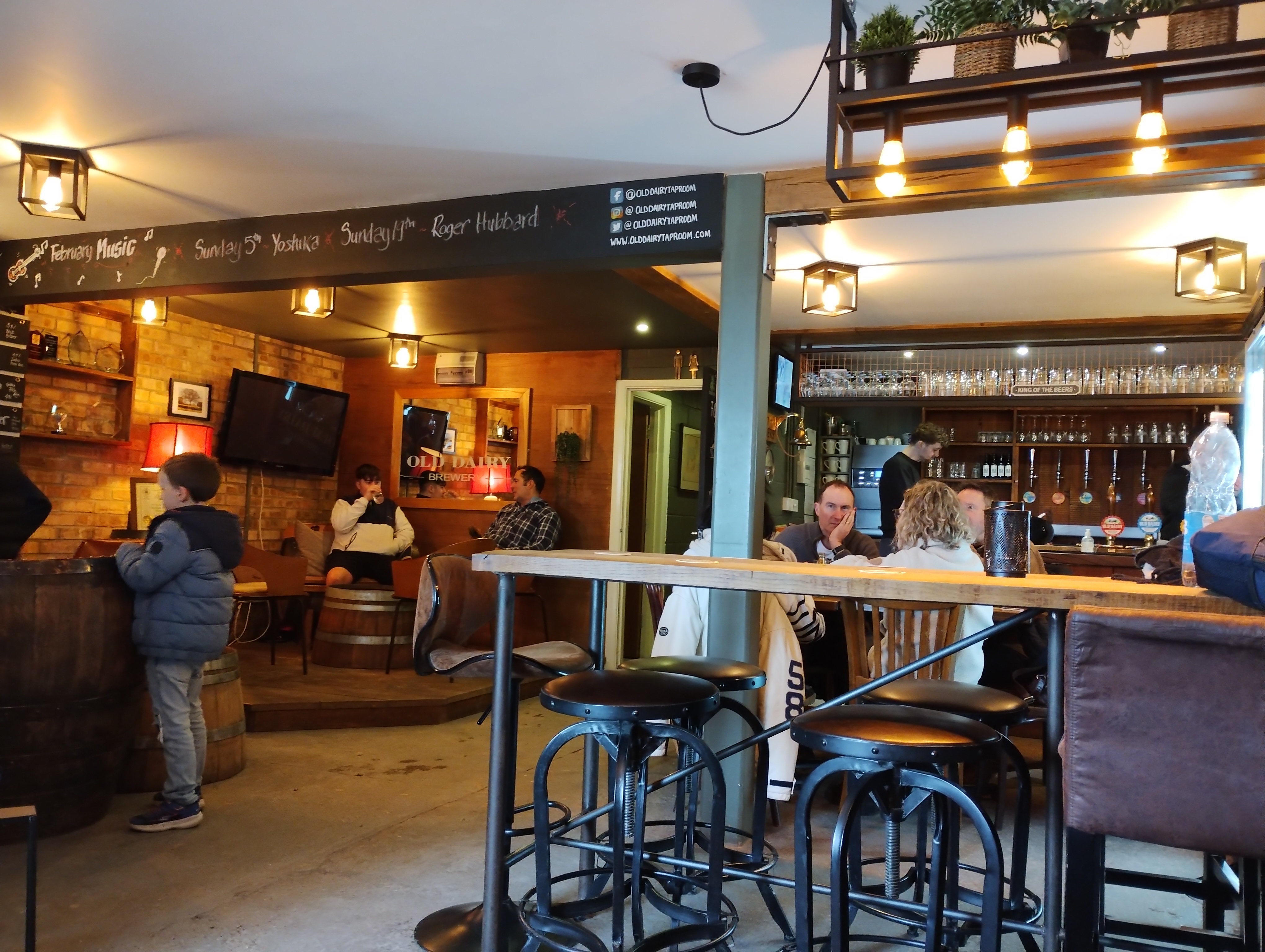
Exchanging messages with my ex-colleagues after the brewery closure lead to us finally getting our act together to meet up for another reunion. We went to the taproom in Tenterden, which allowed us to have a last look at the brewery before the vessels go to their new home. 


Going to a brewery on Hukins hop farm

They've done a good job with the taproom, and it's quite pub like, which is good for Tenterden where be pubs are a bit restauranty. 


Old pump clips on the wall brought back a few memories, once again some good some bad!

Though mostly good, obviously

The Old Dairy beers are now being contract brewed, and whoever's doing it seemed to be doing a decent job. The staff were great and it was good to catch up with old friends. 

photo by Sean Calnan


Saturday, 31 December 2022

Golden Pints 2022

This morning dew, don't it take like wine to you

In this brand-new world so brave and true.

This golden pint is gleaming like it's just been born

In a brave new world, a brave new world ... out of the blue


Pic from B&B


Best UK Cask Beer:

It's Thurston's Horsell Hop, their green hop beer, that wins this year. Outstanding stuff!


Best UK Keg Beer:

There have been a few occasions this year where I've had to suckle at the devil's drainpipe. Can I remember any as standing out? No, I cannot. My slackness with the blogging doesn't help either. I went to Curious and had a session lager there. Went to Beavertown too but they're tossers. And I was back on the Bermondsey beer mile at one point too. Oh, I know, Hiver Fabal! It's one of mine so definitely that. 


Best UK Bottled Beer:

I did get given a case for xmas, which shot it to the top of the rankings: Ridgeway Very Bad Elf.


Best UK Canned Beer:

I canned beer for the first time this year which was all very exciting. It was Hepworths Charger so that. 


Best Overseas Draught:

I did get overseas this year, back to the wonderful Carnivale Brettanomyces, though in Belgium this year. It was based at Misery brewery. Can I remember what I drank there? No. But I did have some of Misery's so them. 


Best Overseas Bottled Beer:

I've had a few oversea's bottled beers. And recently too. Which ones though? Ooo...Orval featured so that's a safe choice. 


Best Overseas Canned Beer:

Did I drink any overseas canned beer? Possibly. Can I remember any? Definitely no. 


Best Collaboration brew:

Can't think of any.


Best Overall Beer:

Horsell Hop.


Best Branding:

Thurstons as usual. 


Best UK Brewery:

And it's Thurstons again. 


Best Overseas Brewery: 

That'll have to be Orval.


Best New Brewery Opening 2022:

No idea.


Pub/Bar of the Year:

The Crown of course. 


Best New Pub/Bar Opening 2022:

No idea for that either. 


Beer Festival of the Year:

The GBBF was back! Hurrah!


Supermarket of the Year:

I've barely bought any beer from supermarkets but Booths was the best. 


Independent Retailer of the Year:

The shop at the Hogs Back brewery. 


Online Retailer of the Year:

Not bought any online beer this year.


Best Beer Book or Magazine:

Hmmm...I did fairly well at reading this year. But what beery books? Drinking Up the Revolution has a great title but is a bit of a curate's egg and the author is a Bolshie so he's not winning unless he apologises for Kronstadt. Oooo yes...the CAMRA book that was good: Laura Hadland 50 Years of CAMRA.


Best Blog or Website

Blogs still seem to be on the way down but Boak and Bailey soldier on regardless so them. 


Simon Johnson Award for Best Beer Twitterer:

Will it still be around next year? What a plonker that oligarch is. Anyway, this year I'm going with @jamesksowerby


Friday, 30 December 2022

Truly a stupid idea

When recently seeing The Nephs I felt my throat get a little dry. Must have been all the dust. When I went in search of refreshment I was surprised to see what was being advertised on the bar runner: alcoholic sparkling water. 

Truly Hard Seltzer if you were wondering which particular alcoholic sparkling water. No, I'd never heard of it either. 

Hard seltzer's grew massively in the USA and were widely expected to do the same here but it just hasn't happened. Molson Coors spent millions installing a hard seltzer canning line at their Burton brewery to package Three Fold (and no, that's another one I'd never heard of). I have looked out for hard seltzers in supermarkets and have spotted White Claw but don't think I've seen any others the wild. 

A big problem I see for hard seltzers over here is it just sounds a bit rubbish. We don't use "hard" to mean "contains alcohol" and the only time use use "seltzer" is when it has "alka-" in front of it and is used to cure hangovers. If I had a product that was basically fizzy water with added alcohol I'd go out of my way not to describe it like that. As Truly have had to explain on their own bar runners that the drink is alcoholic sparkling water I think they're not only on the back foot but fighting a losing battle from the start. "Do you fancy an alcoholic water?" "I'd rather have a beer if it's all the same to you thanks"


Thursday, 22 December 2022

Brewers Congress 2022

The Brewers Congress at a new venue in London this year. It was better for the stalls but not as good for the talks. I also heard they ended the posh dinner evening a lot earlier so all the speakers didn't look completely hung over this time. The talks still started late though so they were rattled through at a brisk pace. 


First up was Rudi Ghequire from Rodenbach brewery. My extensive notes tell me: 

Acetic acid to ethyl acetate
Centrifuges not filtered
Classic pH3.5. Grand 3.3

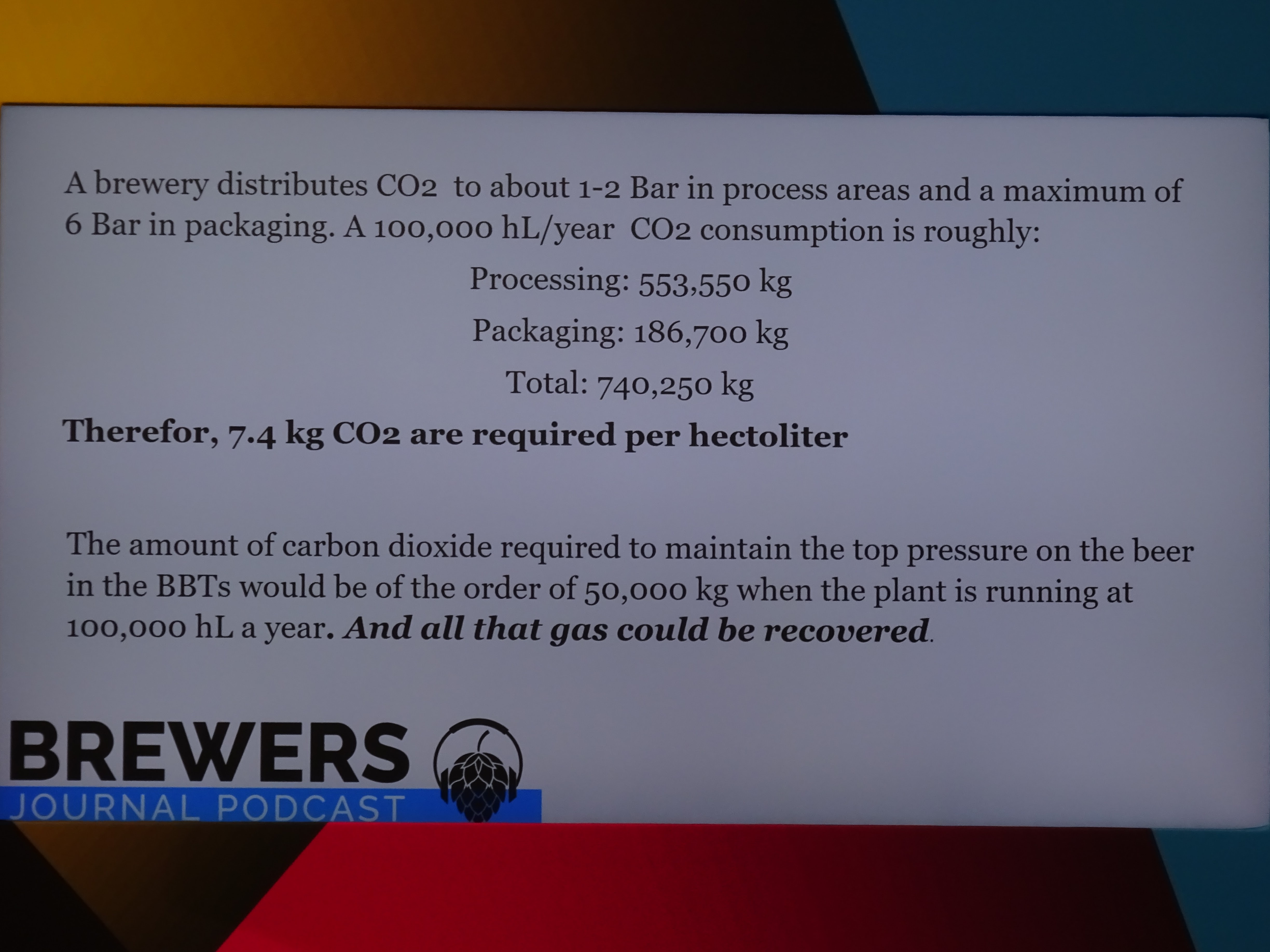
Then it was Jaime Jurado to talk about CO2. I took no notes at all but I did try and get a picture of every slide. CO2 prices have gone up massively and we've got a new CO2 recovery unit at work so this talk was of particular interest to me. 


Then Dawn Maskell from Heriot-Watt talked about an unfilterable haze, though rather unfashionably about how they'd identified and helped prevent it. Perhaps the haze additive commercial spin off will follow next. 


My notes and pictures seem to have died a death after this so no doubt I'd moved on to the networking